
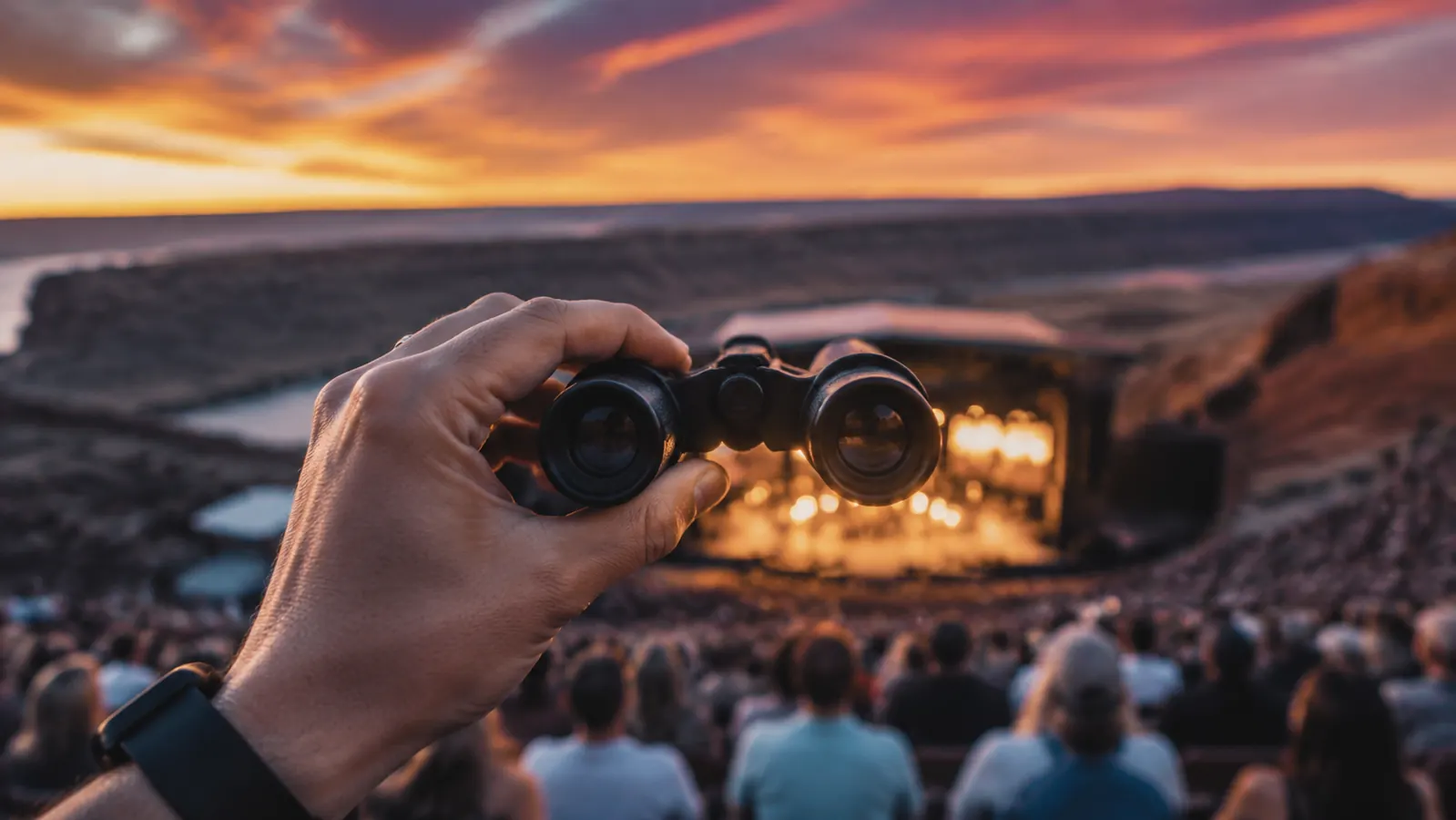
Pass the binoculars, will you? Every show this season I have said that sentence, and these days my friend Rita just hands them over without asking. I am Heidi, a retired 60-year-old from the Bay Area, and I go to more live shows now than I did when I worked full time. For a whole season of sheds, amphitheaters and arenas, the first thing I reach for in my clear stadium bag is the occer 12x25 compact binoculars, and I only take it out once the band is a few songs in and the slow one finally arrives.
I bought them before a long stretch of outdoor and indoor shows, telling myself I was done squinting at a stage where the band looked like tiny figures. The spec read almost too good for how small the case was: twelve times magnification in a glass barely wider than my palm. So I hoped it could be real. This is the honest, long-term review after months of actual seats, from the front lip of a lawn section to the last dry row of a covered arena, so you know whether a small pair like this belongs in your bag.
The Quick Verdict
A good compact binocular for a show day. Twelve times brings the far stage close, it disappears into a bag, and after a full season the focus dial and hinge still feel tight. Aim at the middle of the stage and the center is crisp. It is not a big lens for stargazing, so keep your expectations inside what a 12x25 can honestly do under the lights.
Amazon Check Today's Price →Close the Gap Between You and the Encore
Sing along to the actual face on stage instead of a tiny shape on a distant screen. A pair small enough for a clear bag and steady enough to hold a face through a full verse.
Amazon Check Today's Price on Amazon →How I Have Used Them, From a Festival Lawn to the Far Floor
I carried the occer to a full festival weekend in the spring, an outdoor show with a drizzle in May, a covered amphitheater in June, and a loud arena in late summer. In every one the binocular sat in the main pouch of my clear, stadium-required bag, stayed out of the way all afternoon, and slid out the moment the good song appeared. In that time it became my answer to the half-fine seats you suddenly regret at the door, and it is the reason a singer's actual face, not a distant shape on a screen, is what tells me when to sing along.
My trick is not to hold it tight. Everyone shakes a little when they raise a lens, and the shake worsens as you squeeze harder. I rest the side of my hand on the seat back in front of me, or on the rail beside the stairs, and I let that firm surface carry the tremor. Then the occ roundsing is steady enough that I keep a single face in it through a whole verse. Twelve power sounds like a lot to hold still, but the frames are so light they settle against my brow without the shaking I expected from any strong rain glass.
The honest judgment for a small binocular is the middle and back of a big room, and that is exactly where this one pays off. A seat that feels wasted at the door turns into a good spot the moment the opener leans toward a microphone stand and I can read the band letter by letter across a drum head. The tighter the venue, the less you need it, and the pit of a small club is no place to be looking through lenses when the singer is already a reach away.
Even a good seat pays once you know them. At a past show with four men sharing two microphones, the whole arrangement made sense only through these lenses. The first time I watched the lead shake his head and step back from the vocal mic, I finally heard that song the way it was written. Small moments like that are what I am collecting, and a lens I can raise and drop without a bump on the elbow is the reason it has become a habit instead of a gadget I remember at home.
What the Numbers on the Barrel Actually Mean at a Show
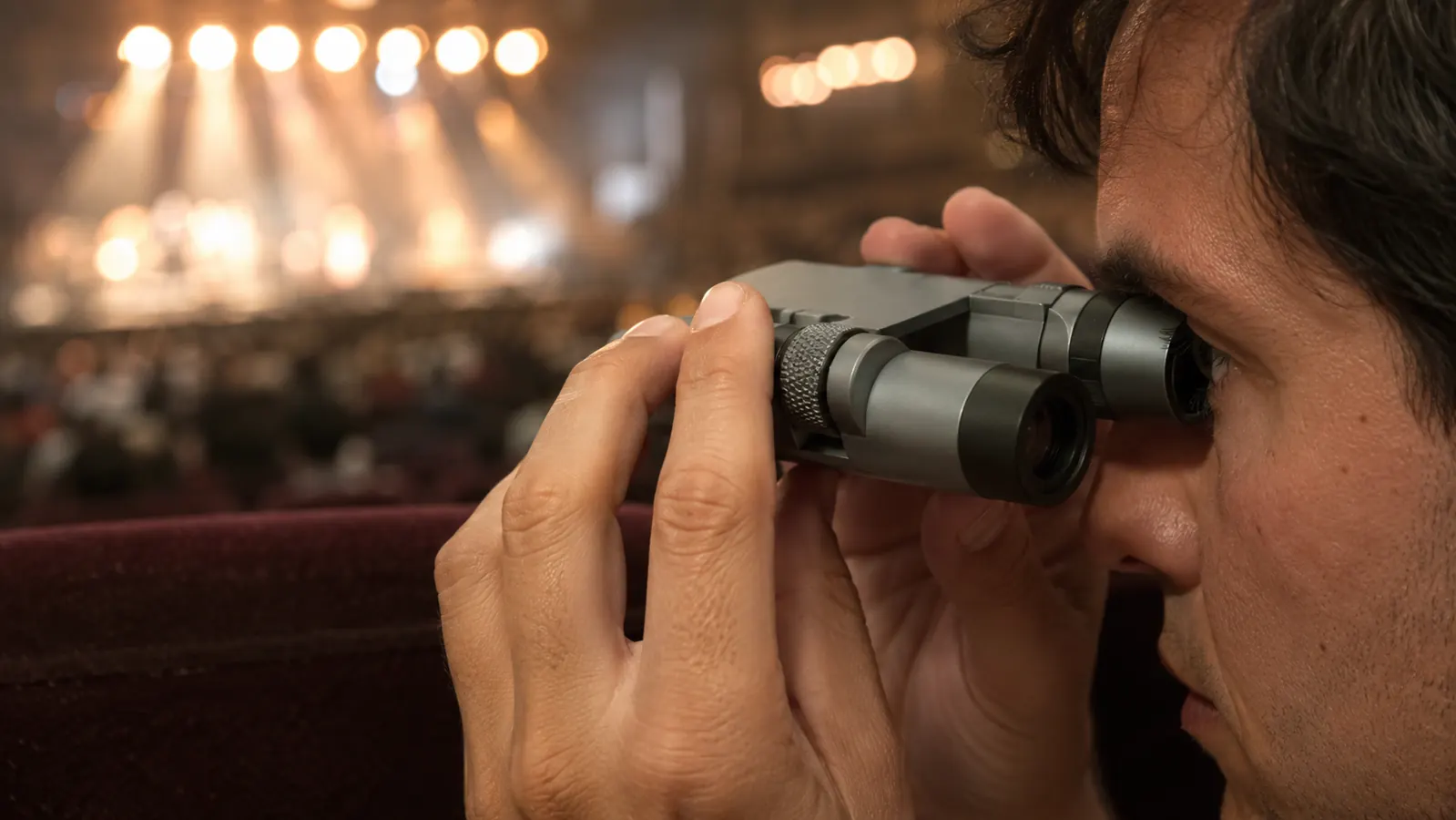
The 12x25 printed on the seam reads like a rarely-letters spec, but it is easy once you sit with it, and it shapes how I use these all year. The twelve is the magnification, how many times nearer every object appears. A singer standing at the far wall of an amphitheater becomes a face I can actually read. The twenty-five is the diameter of the front lens in millimeters, and that number is the entire story of how much light gets inside during the dim, important middle of a set.
A larger front lens lets more evening light in, and that makes a glass brighter to my eyes. The occ selected a twenty-five for the barrel so it could stay small and fit in a bag, and in a bright afternoon stage it feels close to the band. As the sky goes dark in the last part of a set, a larger birding glass would pull more of that modest overhead light. I can still make out the full row of musicians, but I lose the smallest detail of a face during the low part, and a guitar string goes a little soft.
Here is the honest trade you are making. A bigger front lens gathers more light, but it turns heavy, asks for a shoulder strap, and needs a bulky case that a gate guard notices. The occer kept the design light and pocketable, and I have never once carried it all day and wished it were a larger optic. What I give up exactly is a few minutes of crisp detail when the houselights drop, and for a person who lives for the final song and the encore, that is a trade I accept.
The Good, the Better, and the Just Okay After a Full Season
The first thing I love is that I can settle it around my neck all night and never feel it. I slid it into the front pocket of a light coat for an October show and forgot it was there until the opener's first chord, which is exactly the quality I wanted on a day out. It clears the gate in one glance because it is roughly the size of my hand, and security no more stops a small optic than it stops a bottle of water.
The second thing is the grip. I have small hands, and the ridged texture on the barrel has kept it from slipping in the spray of a drizzle show, when the other hand is holding onto a coffee. The lens caps clip on and off without a fight, the strap is the right length to sit around a neck, and the whole set even tucks into the hidden flap of the clear bag. A tiny case that hides in a plain zipper earns its keep, and this one does.
The part that is genuinely better than I expected is how steadily it holds focus on a real stage as the lights move around. Stage lighting swings and flashes, and a lot of cheap glasses hunt for focus and miss. The occ rounds have never once lost a face to a hard white flash the way a fold-up shop pair did. They settle in, lock my view, and stay put. For the many hours I have watched a stage through them, this pair does not mislead me, and that is the highest praise I can pay a tool.
The moment into passing them was a damp May evening under a covered amphitheater, and occ kept steady in my palms while I watched the keyboard player's hands move over a warm-white light. That is why they now live in my clear stadium bag.
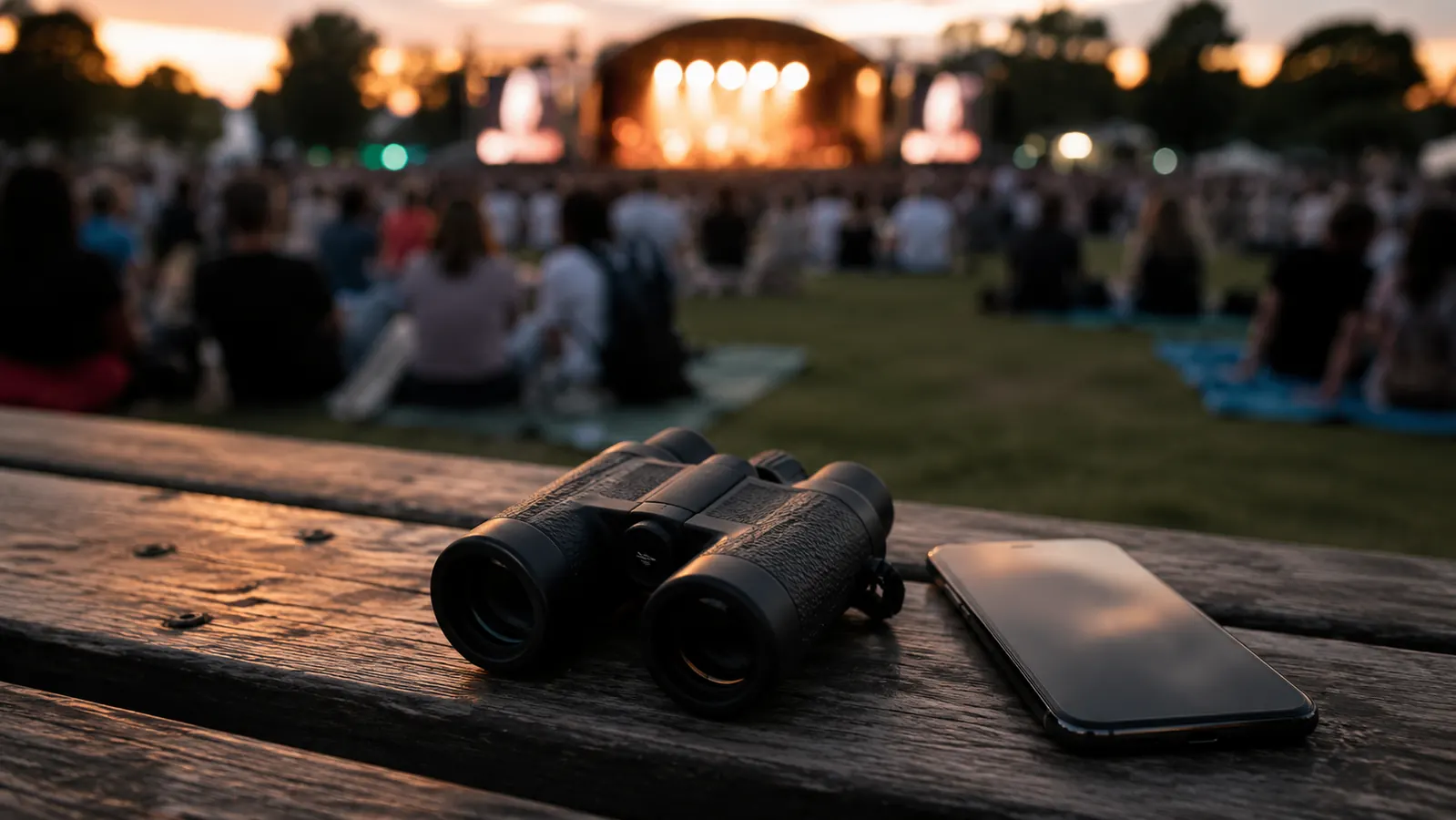
After Six Months, Where the occer Holds Up and Where It Gives a Little
The focus dial has not loosened or tightened on me in all the time I have carried it. A fresh pair can be a little stiff for the first week; after a season it moves easily with one thumb in the middle of a song, which is how a well-used accessory should feel. The barrel hinge still has most of its resistance when I fold the two sides together, and the glass still delivers a clean, even picture with no dust or haze even after some damp, hard nights.
The honest catch is that this is not a premium glass, so it is not a birding or stargazing instrument, and I do not treat it like one. The center wheel pulls both barrels together and serves it, but I cannot tune one eye on its own, which some pricer optical sets allow. That has never cost me a show, because I press both eyes snug against the frames so the two sides of the glass deliver one smooth field. But if one of your eyes is much stronger than the other, an independent left eye control would matter to you, and that is the edge to keep in mind.
In the dark, where it offers up the most, I have learned to use it well. When the stage lights drop into a quiet and slow stretch of the program, I raise the pair a little sooner and aim through the exact center of the lens, where the image is brightest. That small habit has turned a good many tapestries of low light into clear, watchable moments, and it is the wise workaround for a 12x25 kept honestly.
What They Are Like Around Your Neck All Night
A spec sheet gives you the weight and leaves you to imagine it. Here is the real version. Around my neck on the supplied strap, through a three hour show with two openers, the occer is present but not a burden. I notice them when I sit down and when I lean forward, and not really otherwise.
What I did change is the strap. The one in the box is thin and it starts to dig after the second hour, so I swapped it for a wider padded strap I already owned and the whole complaint went away. That is a small thing to have to do, and it is worth knowing before you buy that the strap is the first part most people end up replacing.
The other habit worth forming is tucking them inside your jacket rather than letting them hang loose in a tight crowd. They swing forward when you stand up, and on a packed floor that means knocking into whoever is in front of you. On a festival lawn none of this matters at all.
Who This Is For and Who Should Skip It
This is for the show-goer who sits in the middle and back of a big not and ends a night guessing who is who on the stage. It is for the person with the clear stadium bag who wants one small thing that fills a pocket and the person who wants to watch the pad player hit a kick drum without missing a word of the lyric. It is light, it is small, and it is honest about all a 12x25 can do.
Skip it if you want a premium glass that shows clean faces in the darkest amphitheater odd, or if you mostly see shows indoors once the lights go to black. If so you want a bigger front lens, and this is not that pair. Skip it if one of your eyes is severely stronger than the other, because you will fight to line up the two sides the whole stay. And when the point of a show for you is to stand somewhere with your eyes closed and your whole body in the way of the sound, then any pair of lenses is just weight you carry, and a great night needs no binocular at all.
What I Liked
- Tiny and light, it disappears into a stadium bag until the song asks for it
- Twelve times pulls a far stage face close enough to read with one hand
- Focus dial turns smoothly and stays tight after months of shows
- Grip held through a drizzle show and the strap never frayed once
- Folds small and clears the gate with a single glance
Where It Falls Short
- The small front lens runs low on light during a very dark set
- A single center dial, no way to focus one eye on its own
- Faces soften just outside the middle of the view
- It is not a birding or stargazing glass, so know the difference
Bring the Far Stage a Row Closer This Season
No more guessing who is under the hat on the far band. A light pair that clears every gate and brings the encore within one hand's reach.
Amazon Check Today's Price on Amazon →