

The morning after a two-weekend stretch of back-to-back shows, I woke up and my own quiet had a hum in it. Not music. A low, steady ring that my heartbeat made louder. I am sixty, I live in the Bay Area, and I have been going to concerts since my twenties, the Fillmore, the Greek, Shoreline, all the way back to the standing-room shows where nobody thought twice about planting themselves under the speaker stack. For years I told myself the ring was just the price of a good night. Then last season I sat in a hearing waiting room full of people younger than me, and every one of them said the same thing I had been repeating to myself for two decades: once you get used to the ring, it hardly bothers you anymore. I finally stopped pretending, ordered a pair of Eargasm high-fidelity earplugs, and took them to every show for a full festival season. This is what that season actually looked like.
Let me say plainly what I was afraid of going in, because it is the same thing that keeps most people my age from wearing any earplug at all. I was sure that anything strong enough to save my hearing would turn the music into a muffled, cotton-ball version of itself. I imagined sitting through a night where the guitars came through wrapped in blankets and the kick drum lost its floor. If that worry sounds familiar, keep reading, because it turned out to be exactly the problem these were built to solve.
The Quick Verdict
A full season of loud shows with no next-morning ring, and the music still sounded like music. If you love live sound and value what is left of your hearing, these belong in every pocket.
Amazon Check Today's Price →Stop trading your hearing for a good seat
You do not have to choose between the music you love and the ears you will still want at seventy. A season of Eargasm high-fidelity earplugs starts with one small case in your pocket.
Amazon Check Today's Price on Amazon →How I've Used Them
I did not want to test these in a quiet room and hand you a spec sheet. That tells you nothing about how they behave where the music actually happens, near the deck, on the lawn, in a standing-room crowd. So I wore them as my only hearing protection for a full season of real shows, real noise, real weather. That season ran from spring winds through the first cold night of fall this year. It included a sold out arena, an amphitheatre lawn that got chilly after sunset, a narrow club where the drum kit was not three feet from my shoulder, and two multi-day festivals where I stood and danced for stretches of hours at a time.
I set a few ground rules so the review would mean something instead of being a mood. I wore the plugs for the whole set, never just the loudest song, because the damage adds up across a night no matter where you sit. I took them to every kind of venue on purpose, since a club floor and a lawn a hundred yards from the stage do not ask the same thing. I kept the little case in my clear stadium bag on festival days and in my jacket pocket at the clubs, so grabbing them at the gate became a habit I could manage with one hand.
And every morning after, I checked the one thing that matters more to me than any number on the box: whether my ears still had that low hum when the house went quiet. My friend Dora set the real bar. She told me that if her ears start ringing the night of a show at our age, she is done going to shows. That was the honest test I carried past every gate. Did Eargasm let me stay in the room for the shows? Here is the long answer.
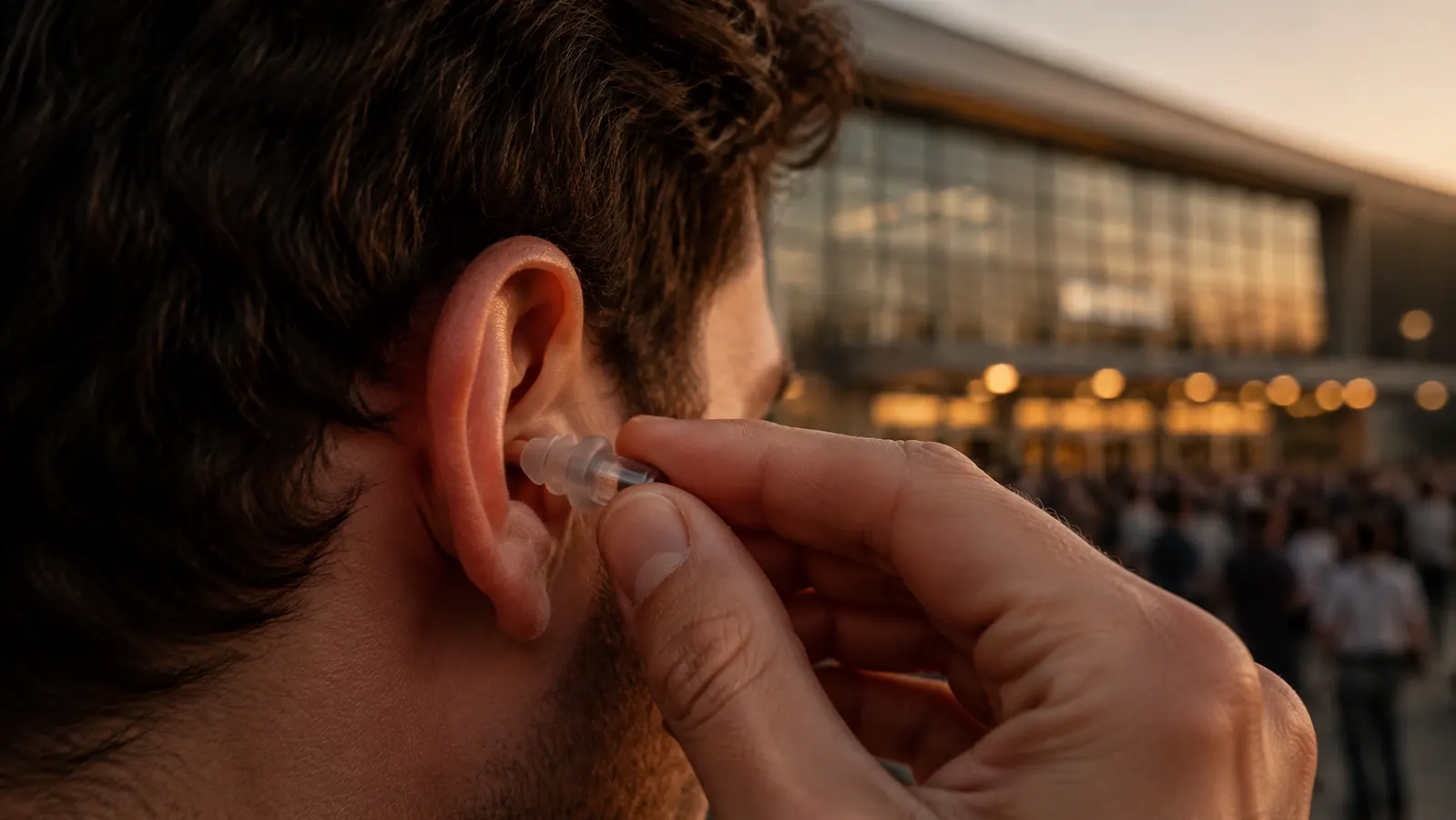
What High Fidelity Means in Everyday Words
The confusion starts with the word fidelity, and I used to wave it off as marketing noise. Here is what it actually means when you are in a concert seat. A classic foam earplug, the kind that arrives in a bag from the pharmacy, treats every frequency the same way a heavy blanket presses on everything at once. It knocks the whole loud show down together, which means it also flattens the vocals and turns the high cymbals into a soft unresolved hiss. You walk out feeling protected, but you also feel like you spent the night behind glass.
Eargasm does the opposite. The little acoustic filter inside smooths out the pressure more evenly, taking the hardest edge off the loudest high frequencies while leaving the music itself whole and identifiable. I did not experience this as a quieter, smaller version of the band. I experienced it more like the part of the sound and pressure that was carving into the top of my head got taken down, while the actual craft of the band, the voice, the guitar lines, the rhythm, all came through the way they meant it.
That even-handedness is the entire reason these are called high fidelity, and it is why they are a genuinely different tool from the dense foam balls I used to pry back out at the end of a night. These bring the noise down by roughly twenty one decibels. That number is what protects your eardrum from permanent wear, and it is the single reason my first loud weekend with them did not leave me with the ringing I used to call my own.
The first morning after a full festival weekend wearing them, my ears were quiet for the first time in years. No hum, no underwater feeling, just clean, quiet silence, and I stood in the kitchen with my tea and nearly cried.
How They Held Up Across the Whole Season
A loud night is one thing. My real question was whether a whole festival season, with sweat, drizzle, dust, and forty plus hours of heavy exposure, would grind these down or let them drift out of shape. I am glad to report they held up far past my expectation. The case stayed small and closed firmly even after it had been in the bottom of a damp festival bag all day. I rinsed the ear tips in a little mild soap and water after every few shows, as the instructions suggest, and they came back clean and still gripped my ear the way they had on night one.
The more important thing for me was that the protection stayed the same all season. I kept an eye out for the tell of a worn-out plug, a filter that went slack or a contact that let the ring bleed back through. Neither happened. When I slipped them in at show thirty eight, my next morning was as clear and quiet as the morning after the very first shows. That consistency is the unseen half of why I trust them now, because a cheap plug can sound fine the first time and quietly quit on you halfway to the summer.
The part about heat mattered more than I expected. A Bay Area summer still has hot afternoons, and I worried the tips would turn soft and slide around during a long day outside. They never did. And on the cold, damp end, the night at the amphitheatre when the fog rolled in, the plugs stayed comfortably in place and never hardened the way a cheap pair tends to. Years later my ears stayed fine and the anchors stayed fine, because the fit sitting deep is what holds through a whole day outside.
The Parts That Work Better Than I Expected
Three things surprised me in a good way, and the first was the fit. The reality is my ear canals skew small after all these decades of use, and I went in expecting every earplug to fight me all night. These come with a few different ear tip sizes in the kit, and once I worked out the one that genuinely fit mine, they sat in place without pressure and without creeping. I danced, I walked between stages, I leaned over a railing to watch the side stage act, and not once did they work loose or call attention to themselves. That invisible confidence is what a thing I am supposed to wear to every show has to earn.
The second surprise was the music itself. My standing test for any plug is the opening of a headliner, the song that builds to one huge chord you feel in your chest before the beat even drops. With these in, I still felt the room shake, and the song still landed. I did not lose the great body of the sound, which was the exact thing I went in fearing. I only lost the searing part that used to leave a high painful note ringing in my head by the time I got back to the car.
The third surprise was conversation. The walk between stages, the line at the noodle stand, the stretched quiet between musical acts, I could actually hear my friends speak and be heard back. With the couple of foam pairs I dragged along one season I shouted and misread Dora until the whole effort got exhausting. These let the speech range through cleanly, so I caught the story and the song titles at a normal volume, and honestly that small relief is what kept me reaching for them all season as much as the hearing itself.
The Tradeoffs Nobody Puts in the Ad
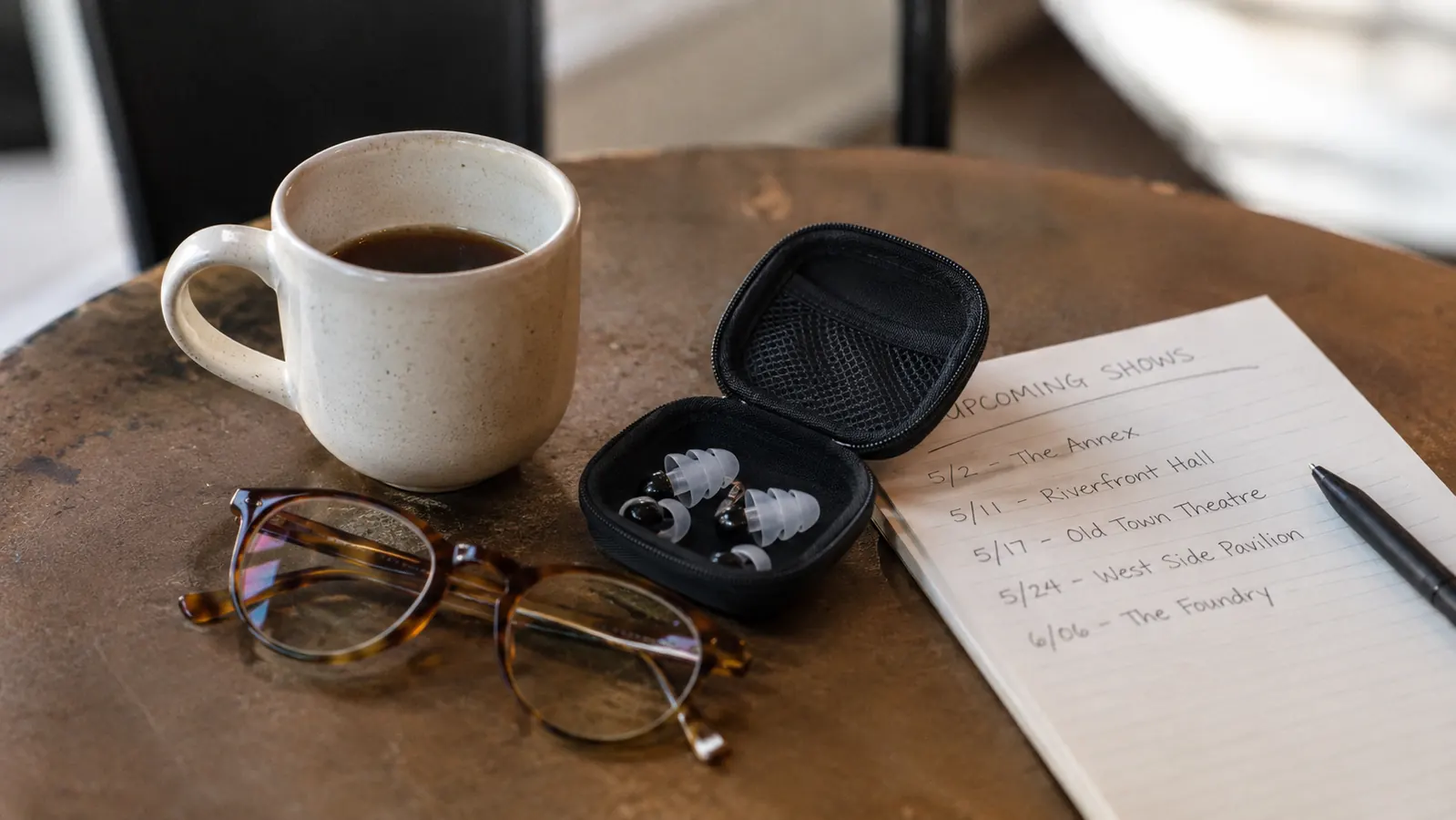
An honest review has to earn its cons, so here are mine. The most genuine trade-off is the fit is personal. Even with the three tip sizes in the case, you will have to spend a few minutes on two or three wears finding the one that seals in your ear. That step is not optional. A loose plug gives you both weaker protection and a closed-in, hollow sound. The filter only works the way the maker designed it once the seal is right, so anyone hoping for absolute effort-free should know there is a short settling-in period first few times.
Second, they are small, which is a blessing only if you are careful with them. A single earplug on a festival lawn is practically impossible to find again, and a lost plug means a loud night with no spare. I did not lose one in the whole season, and that only because I built the habit of dropping them straight back into the case the moment I took them out. The case clips onto you so it stays put, but this is the kind of gear you have to be disciplined about, because the smallest most useful things are the easiest to leave behind when you stop keeping tabs on them.
And the honest conclusion. These keep the ringing out of your ears, but they will not save you from a band that is simply too loud to sound any better. They also do you no good on the night the set starts and the case is still sitting unopened in your bag, and that is exactly the night that does the real, permanent damage. The protection only helps if it is in your ears from the first note, and remembering to do that every single time is the part that belongs to me, not to Eargasm.
Who This Is For
These are for you if you still love live music and you have begun to make quiet excuses for your ears. You recognize the pattern: the ring in the morning that used to be occasional, then every time; the room that seems to get quieter earlier each season; the volume you keep nudging on your own head to keep up. You are not ready to give up the floor, the pit, the big open-air nights, and you should not have to. What you want is a way to feel the show and keep the ears that let you feel the show, and my season with these says the two are not actually in conflict at all.
They are also, just as honestly, for the younger people reading this, the ones just starting to notice that the music is not arriving the way it used to. I sat in that hearing room and watched how much a single decade of unprotected shows can cost a body. If you have even once felt that tell-tale ring flicker on after a night out, hear me clearly: it is immeasurably easier to protect ears that do not yet hurt you than it is to buy back the ones that do. Do not wait until you are the one in the chair.
Who Should Skip It
Honest news now. If you go to maybe four shows a decade and you want one simple thing you and a partner can pass back and forth, stop and think. This is not that kind of product. A good earplug seal is personal, and the tip that fits my ear is not the fit that works for Dora's ear no matter how I fold it. Two different people cannot both wear one fitted pair well in the same night. If sharing is the plan, buy two pairs of these or keep a cheap throwaway foam pair for those rare years when you want protection above all else.
And if you go to a show mostly to say you were in the room, rather than to actually feel the music, these will spend most of their time at the bottom of your bag. They do their best work on the combination of loud, lasting sound and the quiet you want on the drive home. If you have already decided the ring is the price of being there, then no plug is going to be enough to justify the habit. It is more honest to leave them in the drawer than to carry them and never use them.
What I Liked
- Take the loud, harsh edge off without muffling the vocals or the instruments
- The music keeps that energy in your chest, so the show still feels live
- Swap the ear tips for a fit that stays put through a full set of shows
- Small carry case that clips onto you and survives a festival day just fine
- My next-morning ring is gone, and that is the whole intent of owning them
Where It Falls Short
- Tip fit takes a few minutes to dial in and is personal, not one size fits all
- The plugs and case are small, so easy to misplace without the clip habit
- You have to put them in before the first song or they cannot do their job
Give your ears a season they can afford to keep
Every show from here on is borrowed until you decide to protect it. Start with one small case in your pocket the next time the lights go down, with Eargasm high-fidelity earplugs that keep the sound and save what is left of your hearing.
Amazon Check Today's Price on Amazon →