

I did not start going to shows with earplugs. Long after I learned which venues run out of the cold beer and which bathrooms have the real lines, I was still walking into a loud room empty-eared and telling myself the ringing on the ride home was just proof of a good night with good friends. Then came a two-set Saturday at Shoreline Amphitheatre, and the hum in my ears lasted clean into Tuesday. My audiologist did not scold me. She just showed me the noise chart, the number for a loud concert, and what sustained exposure does to the tiny hair cells that give you the high notes.
I have been to well over a hundred shows and I am still going, these days with a pair of Eargasm plugs living in my bag. The thing that keeps me going is not quitting the loud rooms. It is learning to wear the right earplugs, and the good news is that the right ones do not make the music sound muffled at all. They cut the dangerous peaks and leave you hearing the vocalist and the band more clearly, which is the part nobody tells you before you buy. This is the step-by-step routine I settled on, what to buy, how to fit them, and how to make them as automatic as checking for my keys.
Start with earplugs that tame the volume, not the music
A high fidelity pair keeps the dangerous high-end out while keeping the singer, the bassline and your conversation crisp. I lean on my Eargasm pair at every show now.
Amazon Check Today's Price on Amazon →Step 1: Find out how loud the room really is
I did not need a special meter to make the case, but understanding the number changed how seriously I took the problem. A loud rock concert measures about 110 decibels at standing height near the stage, and some acts push the on-stage line even higher than that. Hearing guidelines put sustained exposure above 85 decibels at the line where protection matters, and the gap between 85 and 110 matters a lot, because every extra 3 decibels roughly halves the safe listening time. Two hours at a loud show can be doing in minutes what takes all day at a calm room level.
You can carry a small decibel meter or look a number up, but for a live show you do not need the exact reading. If you are leaning in to hear a friend, or your ears feel a little stuffy on the way out, or the room sounds louder than a busy restaurant at dinner, then protection is worth reaching for. I stopped arguing about the exact figure years ago. I simply reached for the earplugs every single time, and then I never second-guessed it.
That is the whole turning point, honestly. Nobody means to lose their hearing to a few good nights out; people lose it the evening they let a loud room become the default. Protecting yourself before one show is far easier than fixing anything for it years later, and your favorite acts are worth that small courtesy.
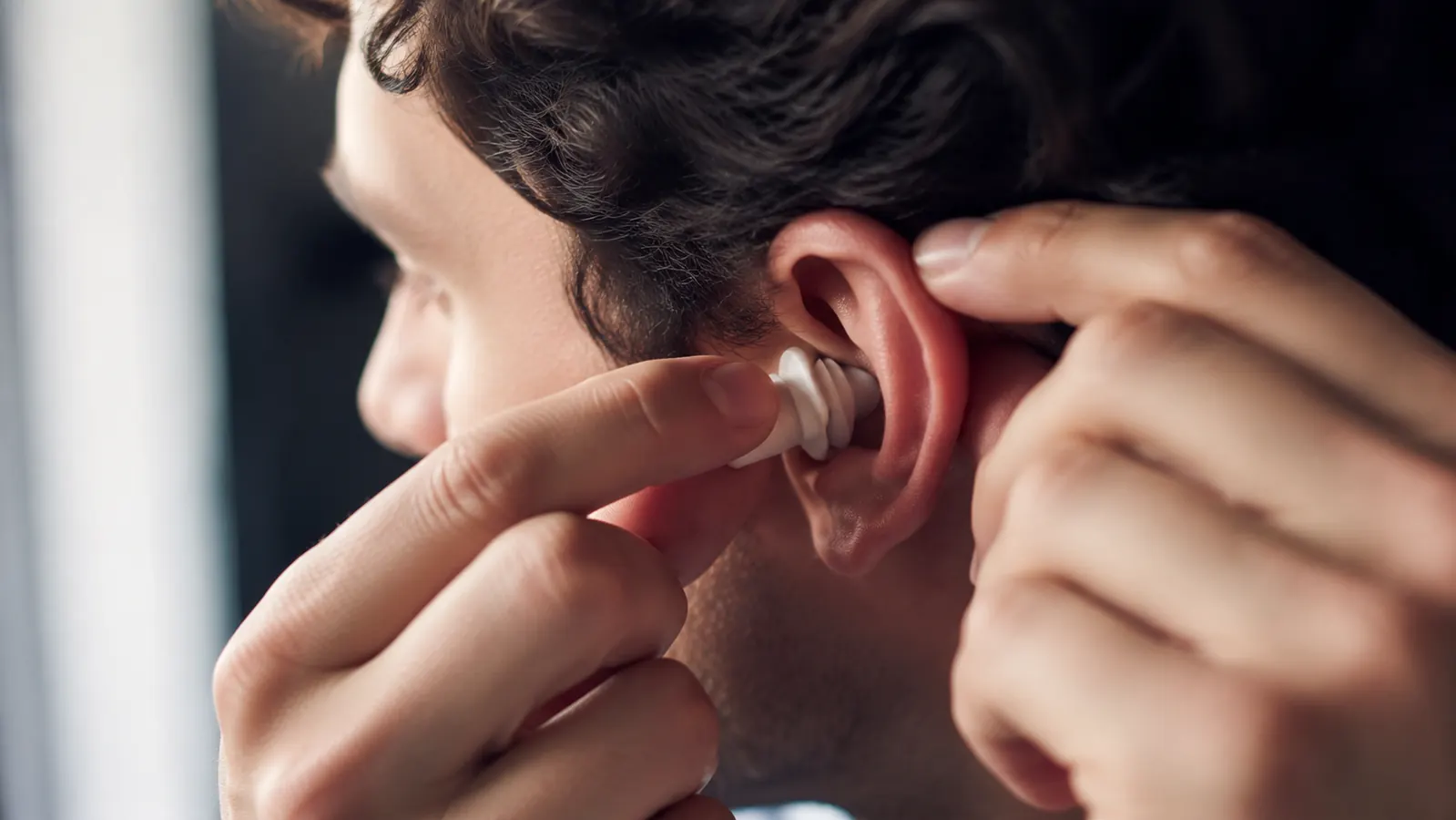
Step 2: Choose high fidelity, not the old foam plugs
The classic orange foam earplugs do protect your hearing. They also turn the show into a dull rumble behind a blanket, and that is exactly why so many of us tried them once and left them in the car. High fidelity earplugs use a fine filter instead of simply stuffing the ear. They bring the overall volume down while keeping the range of sound flatter and more natural, so the music you hear with them in is nothing like the music drowned in cotton.
Eargasm builds this set of reusable transparent earplugs for exactly this crowd, concerts, festivals and musicians, and it is the pair I settled on. The brand sells them toward people who still need to hear a show accurately, with a 21 decibel reduction filter, and they come in a small keychain case so the pair lives on my keys instead of buried in a drawer. That is the difference that matters to me, hearing the vocal, the bevel and the high hat without my ears ringing by the encore.
Other good brands exist, and I will tell you straight that Loop and a few others are worth a side-by-side look too. My honest take is that the Eargasm earplugs fit the shape of my ears better, and the carry case made the habit stick. Fit and carry matter as much as the filter, because the pair you actually reach for is the one that protects your hearing. A fine pair you hate wrestling with in the dark is worse than none on a misty fall night.
The habit stopped my morning ring in the first month. I have not woken up to that hum since the night I first fitted the pair of Eargasm earplugs properly, right before the opening band.
Step 3: Fit them properly before you need them
High fidelity earplugs only do their job when they are seated correctly, and that takes one small specific motion. That is why you drop them in before the music starts, so you have a quiet moment to get the seat right rather than fumbling in a dark crowded room. Wash and dry your hands first, because a clean ear and a clean plug seat better and stay comfortable far longer.
For a flanged set like the Eargasm, you place the plug at the opening of the ear canal and give it a firm, steady press with a slight turn as you guide it in, while pulling the ear gently outward and upward with the other hand to open the canal. You are not screwing anything deep inside. You are seating the plug at the entrance until it sits snug and makes a full seal.
You know the seal is good because the room instantly smooths out. The sharp, rattle edge goes, and you can still whisper to a friend at a near-quiet. A half-seated plug muffles mostly nothing and feels annoying, which is why people pull them out by song two. A correct seat disappears from your mind by the second song, and that disappearance is the whole point. If one side still bothers you, run the press again rather than pushing on with a noisy seat.

Step 4: Put them in before the room gets loud, not after
The error everyone makes, and I made it for years, is waiting until the show is already blasting. Once the opening set has pushed your ears against loud noise for twenty minutes, the exposure has already happened, and the plugs cannot unhurt that. The quiet first minutes and the moments while you wait are exactly the stretch you are protecting. My rule became to put them in at the doors, in the quiet gap between the opener and the headliner, before the lead walks on and the first note hits.
It feels a little forward at first, like wearing sunglasses indoors during the first few shows. Then you realize nobody looks at you on a dark floor filled with people staring at the stage. When the sound team starts their final check and the room swells a few minutes later, I am already protected and the music arriving through the filter is still clean and detailed. That one awkward minute at the set break buys the entire night.
Once you sit in the quiet you start to hear the room the way the sound tech does. I notice things I used to miss, the singer's fingers on the guitar strings, the bridge dropping into the chorus, the breath before the final note. Protecting your hearing has not flattened my shows. If anything, it sharpened the ones I care most about. That is the honest reason the habit stuck with me, not fear of a chart, but the evening being genuinely better with the plugs in.
Step 5: Care for them so they carry you for years
A reusable pair only pays for itself if it stays clean and snug. After each show I wipe the filter with a dry cloth to clear wax and dust, then stand it in the small carry case with the case open to dry. Once a month I do a deeper wash in warm soapy water and let the pair air dry completely before it goes back to the case. Never boil them and never rest them in alcohol, because heat and solvents can harden the material and warp the seal at the ear.
The keychain case is the real keeper. Mine keeps the pair on my keys so I show up and the hearing plan are the same motion. When the tools live in a drawer, every night becomes a last-minute fumble out of the bag or a lost pair under the seat. On the keys, they are always with me, and I wear them before I have even decided to. That physical carriage is what made the habit last for me.
Replace them when they stop seating the way they once did. A plug that has compressed or worn fades, and a plug that does not seal cleanly lets the loud back in through the gap. Mine carry me a season or two before I switch in a fresh set, and I check them for seat and fit early every fall so they never run past the good part of their life quietly.
What Else Helps Around the Set
Good plugs will not remove every risk, and a few other habits do even more. The loudest stretches are almost always the first songs, the encore and the walk through the crowded exit. Those are the moments to double-check the fit and to re-seat any plug that slides slightly loose. The closest floor is fun but sits in the hottest part of the speaker wave, so a couple nights a year I take the mezzanine instead, the same good pair in, and enjoy the same show a little above the worst of the crowd.
One more tip, start now, not when a cousin mentions their own ringing. This matters because I speak with years of loud rooms behind me, and the ears you protect are the only pair you own. The cheapest habit in your whole night out is the small set you slip into your pocket on the way to the door. Do not save them for the loudest act on the lineup; the gentle opener counts just as much toward the tally.
Ringing after a show that recovers by morning is called temporary threshold shift, and it is one of the softest warnings your ears can give you. Treating it like a normal little part of the night is the real mistake, because it is the sign last night got closer to the line than is good for next year. When you can walk out of a venue quiet, clear and without the hum, that is the sign the protection settled and is doing its quiet work.
Make the earplug as automatic as your ticket
The habit sticks when the good pair lives on your keys or in your bag, so the show plan and the hearing plan are one plan. That is exactly where I keep my Eargasm set now.
Amazon Check Today's Price on Amazon →