
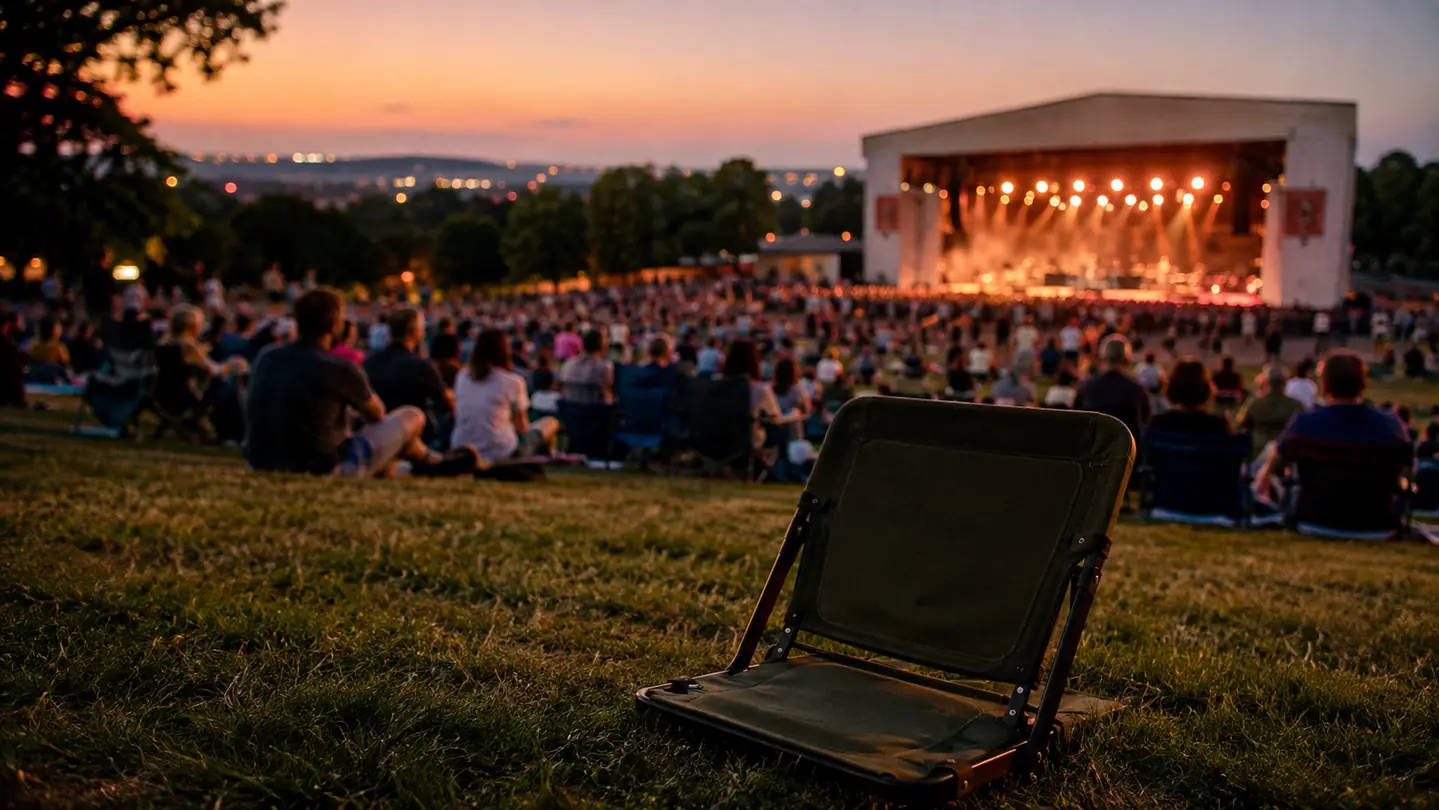
The best seat at a show is the one you never think about. I have spent many nights at the shed and the amphitheater, and I can tell you the exact moment a bare bench stops being fine. It arrives around minute ninety of a three hour set, when your back runs out of patience before the band does, and the rest of the night becomes a test of will instead of a joyful evening.
A portable stadium seat is the answer, but they are not all the same. A good one disappears into a tote, rides on your shoulder, holds your weight, and lifts your back so you can watch the whole set. A bad one is a thin cushion that slides off, or a clumsy object that is just one more thing to carry. I have owned both kinds, and here is the system I follow now so every seat I pick comes out right at the gate the first time.
The Seat I Reach For Before Every Shed Show
If you want to start with a seat that worked well for me all season, the SPORT BEATS chair with back support is what rides in my car. It folds flat, stays steady on a bench, and holds my back through the longest set. It is a solid place to start the search.
Amazon See the Seat Today →Step 1: Be Honest About the Numbers
Before anything else, write down a few honest facts. How heavy are you? How long do you truly sit? For me that is often four hours, with an opener, a headliner, and a break in between. And how much do you feel the cold and the damp after dark? Those are the numbers the seat has to answer, so be truthful with yourself before you go shopping.
When you know your weight, read the limit printed on the seat rather than the look of the page. That printed number is the honest one. A seat that sits right at its limit tends to give way slowly across a long set. My rule is to buy with room to spare, so the frame and the covering stay well clear of their weak point. The seat I use is rated far above my weight, and I feel that reserve most on the walk out, when my legs still feel strong.
Also think about who sits beside you. If a friend would like a turn, or a second adult jumps in, the rating covers one person, not two. A folding frame is made for the size printed on it. Honor that, and the frame stays solid for years, without a sudden fold at a bad moment.
Check the height of the seat as well as its weight. When you sit down, your knees should fold into a natural, easy angle, not stick out in a pinch. A seat that is too low turns every rise for the encore into a small chore. The right height lets you stand and sit back down without a heave, and you will be most grateful for that at the end of a very long night.
Step 2: Match the Cover to the Season
Once the numbers are settled, the first real choice is the covering, because it sits between you and the bench or the lawn for the entire show. The same seat feels very different at a cool, damp festival at midnight than it does on a hot, dry afternoon in June. Cotton and open foam look soft, but they soak in and hold the water, a lesson I took in on a damp ride home the hardest way.
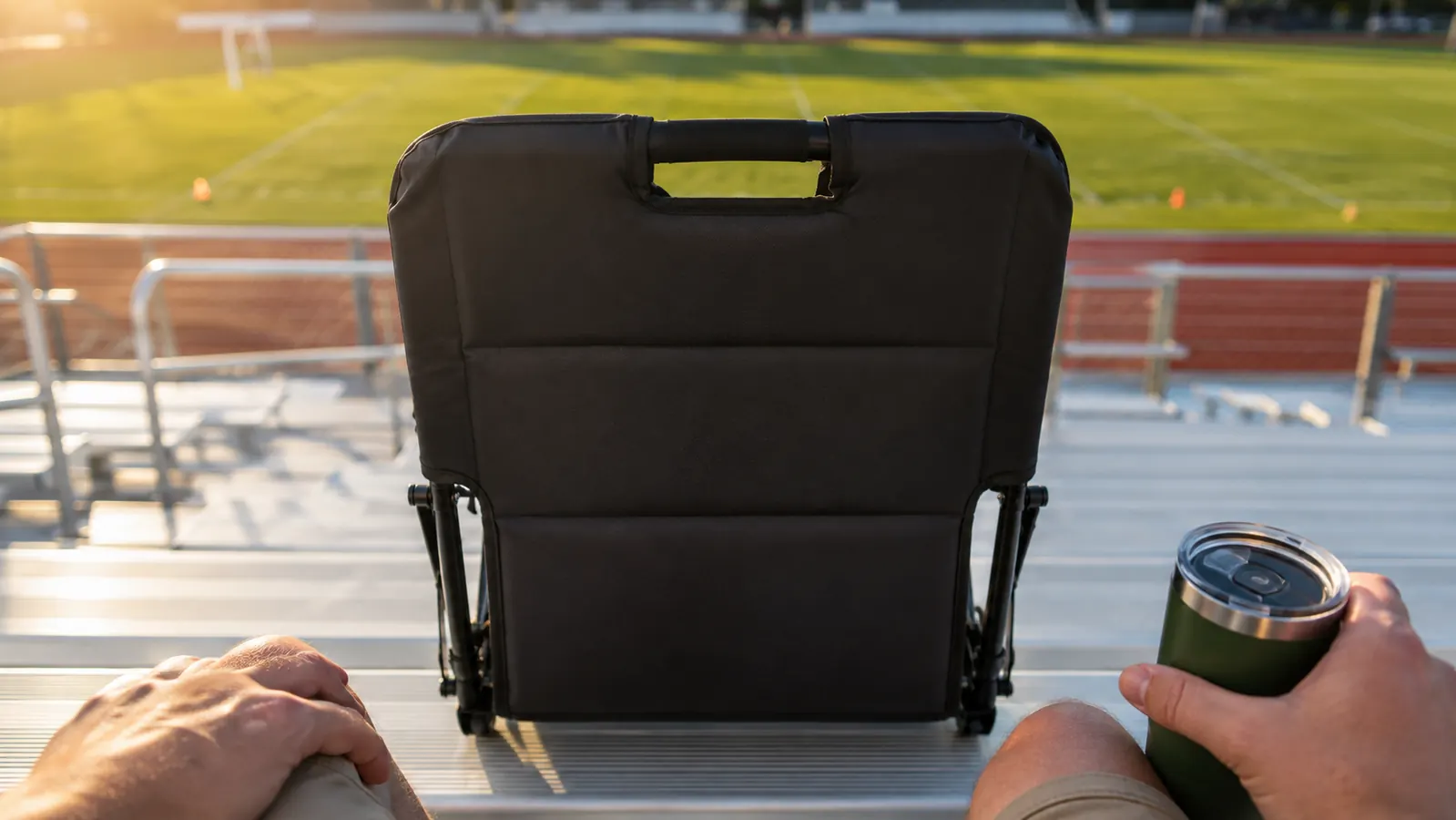
Look for a cover that wipes dry and does not hold water, and a base that will not slide. A non-slip backing keeps an angle on a bleacher or a slope, even as you lean out to see around the people in front. That quiet grip is a real reason I gave up the flat pad that always crept forward, and then chose a folding chair with a back for its steadiness.
Judge the cover over a whole season, not a single night. One that keeps its shape and cleans up easily is still the one I am reaching for a year later, while a soft cover that mats and holds the cold becomes the one left at the back of the shelf. The strongest seat is the one that looks ready the third time you unzip it, not only the first.
Step 3: Buy the Back, Not Just the Padding
The cushion under you is only half the story. The stronger half is the back, and it is where a season turns. For years I bought flat pads with no back and just piled on a blanket. I paid for that at the second song of every block. A folding chair with a true back keeps your spine tall across the longest songs, and that does more for comfort than any amount of foam.
But a back only serves you if it reaches high enough. When the top stops at the middle of your shoulders, you will begin to slope, and by the end of the set you will feel it. The seat I keep has a back that reaches my full height, so I do not ache on the last return. Treat the reach of the back as one of the numbers you check, never as something to pass by.
This is part of the reason I settled on a folding chair from SPORT BEATS. It was the first seat where I noticed how far the back came up, and it holds me at the shoulders instead of quitting at my lower back. Since I began checking the back height like the weight, I have not had a show end in the same cramp. That one measurement did more for me than every catchy slogan a listing ever wrote.
Step 4: Check the Gate Rule and the Folded Size
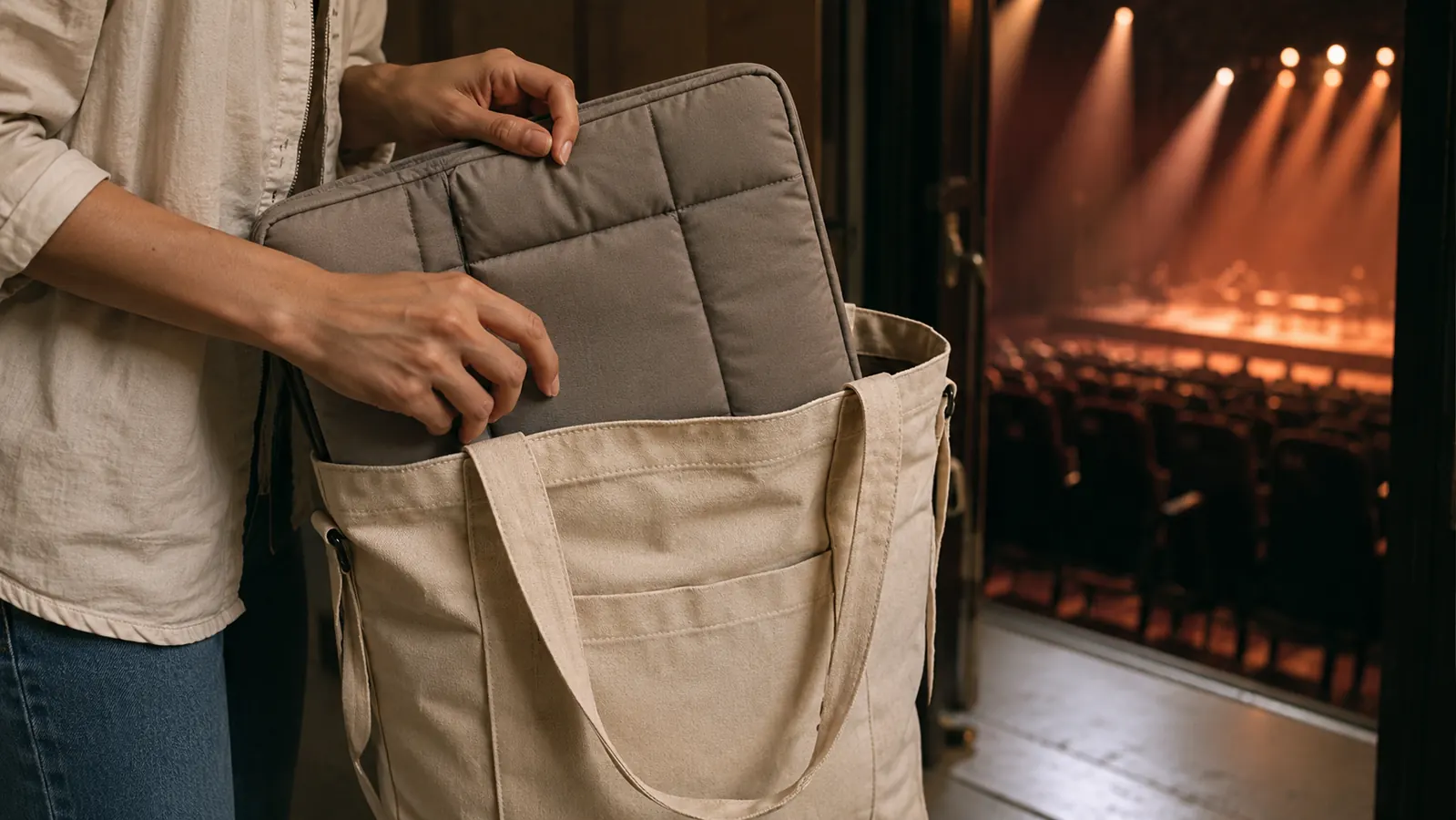
A stadium often welcomes a clear bag while setting its own rule for a seat, so read the page the night before. Many venues let a flat pad or a small chair ride inside a clear tote. The seat that folds flat, with nothing poking out at a weird angle, is the one that clears the door without a fuss and leaves hands free for the phone.
Practice the fold about as much as you rest on the seat. The one I keep folds into itself and tucks into the top of a carry tote, so I am not juggling a bag, a chair, and a ticket at once. If you cannot close it in one calm move while holding something in the other hand, give it a mark against it. Settle on the one that folds without having to fight.
Run through that folding at home, not in the middle of a packed hall while the opener takes to the stage. Some seats close in one easy motion and are the ones to know by touch. The one I bring closes without me looking, and the ease at the line is worth a lot. A seat that is hard to fold is a seat you may end up leaving in the trunk.
Step 5: Sit Before You Commit
You can read every number and still end up with a seat too low, too stiff, or facing the wrong way, so the last test carries the most weight. And you can run it at home. Set the open seat on the floor and sit on it for a full twenty minutes, not a quick touch. Notice how your hips feel, how your legs settle, and then rise to see whether any stiffness stays with you.
A seat that feels fine for two minutes can be a burden at the end of a full show. Save yourself that expensive lesson by doing the sit test at home first. Better yet, take the seat to a real event once or twice. The one that stays comfortable the entire day is the one worth keeping, and the one you keep losing at is the one your body is already telling you to drop.
Fit the seat to the spot where you sit most often. If your usual night is a wide, grassy amphitheater, a seat with a broad, low base can be ideal, since it stays settled on the slope. If you live in the tight rows of an old shed, you want a seat that tucks to the small of your back without claiming extra floor. No single design is perfect on both, so note where you actually sit and choose for that one surface.
What Else Helps
A stadium seat only serves you when it rides along, and that is where most of us slip. Keep it close to the door or in the trunk right after each show, so it is already there for the one coming. In my experience, the line between someone who does the folding and someone who only talks about it is very seldom the label on the frame. It is who truly carries the seat to the gate.
Mine lives in the trunk beside a rolled blanket and a clear bag, and that small habit has done more for me than any feature list. Load the seat the day before a trip, with the flat layer right beside it, so a rushed morning cannot leave it out. Then it becomes part of the same reach that always grabs an earplug or a warm layer on the way out.
A couple of extras finish the picture. A thin, waterproof sheet under the seat guards it on a wet bench or a damp rise, and the same sheet covers your lap on a cool night. Keep a strap or the tote so the folded seat swings to one shoulder and your hands are free for a drink or the phone, and a small pocket for cash saves you if a rare gate takes only paper. Set it all in one place toward the door, and nothing will be missing when the lights go down.
Once you own the right seat, keep the whole kit in one tote by the door, folded with the sheet and your small pocket bag beside it. Grab that one pack on the way out and you are ready. That single habit is the biggest difference between owning comfortable gear and using it, and it costs no more than a minute of your evening a few weeks from now when the next show arrives.
The night I stopped being the weakest part of a great show was the night I stopped carrying a tired back into the seat. A back, a seat that stays, and a fold past the gate, that is the whole change for me, and it was easier than a season might have made it.
The One Seat I Pack for Every Row
With a season of folding chairs behind me, the SPORT BEATS with a true back is the one I take to the very end of the set. It folds small, breezes through the gate, and my back does not argue through the encore. That, to me, is a great seat in one bag.
Amazon See Today's Price on Amazon →